Physical Address
304 North Cardinal St.
Dorchester Center, MA 02124
Physical Address
304 North Cardinal St.
Dorchester Center, MA 02124

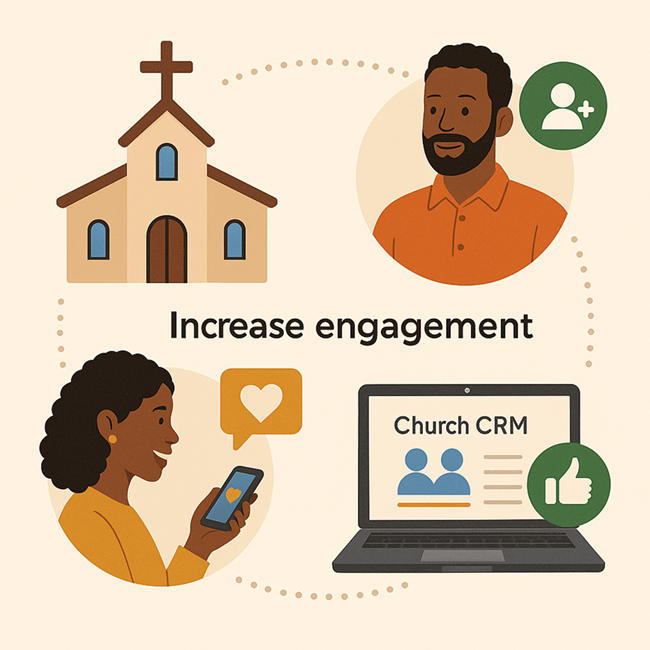
Churches have always been about people—welcoming them, caring for them, and walking with them in faith. But as churches grow and ministries expand, keeping track of people, needs, and communication becomes more challenging than ever.
This is why many churches today are turning to a Church CRM system—not to replace relationships, but to support them.
In this article, we’ll explore why churches need a CRM system, the real benefits it offers, and practical examples of how churches use CRM tools in everyday ministry.
A Church CRM system is a digital tool that helps churches organize information about members, visitors, volunteers, and ministries in one place.
Instead of using notebooks, spreadsheets, or multiple apps, a Church CRM allows church leaders to:
At its heart, a Church CRM exists to help churches care for people better.
Many churches don’t realize they need a CRM until problems begin to appear.
Common challenges include:
These issues don’t happen because churches don’t care—they happen because manual systems don’t scale with ministry.
A Church CRM helps leaders know:
This allows churches to move from reactive care to intentional care.
Real example:
A church notices through its CRM that a family has missed three Sundays in a row. A pastor reaches out—not to question, but to check in and offer support.
Churches communicate a lot—announcements, events, prayer requests, reminders. Without a CRM, messages can become overwhelming or misdirected.
A Church CRM allows targeted communication, such as:
Real example:
Instead of sending one message to everyone, a church sends volunteer reminders only to those serving that week—reducing confusion and improving participation.
Administrative tasks can quietly consume hours each week. A Church CRM automates many of these tasks, including:
This frees leaders to focus on teaching, prayer, and personal ministry.
Real example:
A church administrator saves several hours each month by generating giving statements automatically instead of preparing them manually.
Church CRM systems provide reports that help leaders understand what’s really happening in the church.
These insights may include:
This data helps churches make wise, informed decisions.
Real example:
Leadership notices a drop in small group participation and responds by launching new groups and improving communication—before the issue grows larger.
Volunteers are the heart of church ministry, but coordinating them can be difficult.
A Church CRM helps by:
Real example:
A children’s ministry leader uses the CRM to rotate volunteers fairly, ensuring no one is scheduled too often.
Managing donations responsibly is essential for trust and accountability.
Church CRM systems help churches:
Real example:
A church shares transparent giving reports with leadership, helping build confidence and trust within the congregation.
Some churches worry that technology may feel impersonal. In reality, a Church CRM does the opposite.
By reducing administrative stress, a CRM:
Technology becomes a tool, not a distraction.
Not at all.
Small churches often benefit the most because:
Even churches with fewer than 100 members can experience significant benefits from having all information in one place.
A church should consider a CRM if:
Starting early helps churches build strong systems before problems appear.
Churches exist to love, serve, and shepherd people. A Church CRM system helps churches do that more intentionally and more sustainably.
It doesn’t replace prayer, leadership, or relationships—but it supports them.
For churches seeking clarity, organization, and stronger care for their people, a Church CRM is not just a technical upgrade—it’s a wise ministry decision.