Physical Address
304 North Cardinal St.
Dorchester Center, MA 02124
Physical Address
304 North Cardinal St.
Dorchester Center, MA 02124

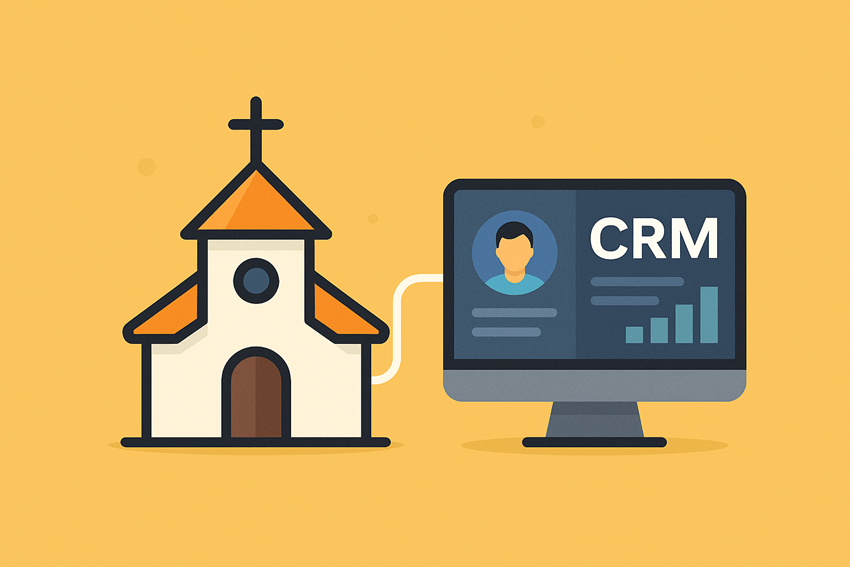
Managing a church today involves much more than Sunday services. Churches are responsible for caring for members, tracking attendance, managing volunteers, handling donations, organizing events, and maintaining strong communication. As congregations grow, spreadsheets, notebooks, and disconnected tools quickly become overwhelming.
This is where a Church CRM comes in.
In this complete guide, you’ll learn what a Church CRM is, how it works, why churches need one, and how it can transform church administration and member engagement.
A Church CRM (Church Customer Relationship Management) system is a digital tool designed to help churches organize, manage, and nurture relationships with members, visitors, and volunteers.
Unlike traditional business CRMs, a Church CRM is built specifically for ministry needs. It focuses on people, care, and community, not sales.
A Church CRM allows churches to:
In simple terms, a Church CRM acts as a central hub where all church data is stored and easily accessed.
A Church CRM works by collecting information from different church activities and organizing it into one system.
Example:
When someone visits your church and fills out a connection card:
Instead of information being scattered across notebooks, spreadsheets, or different apps, everything stays connected and updated in real time.
While features vary by platform, most Church CRM systems include the following core tools:
Many churches rely on manual systems until growth makes them unmanageable. A Church CRM solves common problems that churches face.
Pastors and leaders can see:
This allows churches to care for people intentionally, not accidentally.
Instead of sending mass messages to everyone, a Church CRM enables targeted communication:
Administrative tasks that once took hours can be automated:
This frees staff to focus on ministry instead of paperwork.
Leadership decisions are better when based on real data. A Church CRM provides accurate insights into:
Although the term “CRM” comes from the business world, church needs are very different.
| Business CRM | Church CRM |
| Sales-focused | People-focused |
| Leads & deals | Members & visitors |
| Revenue tracking | Giving & stewardship |
| Sales pipelines | Ministry workflows |
A Church CRM is designed around relationships and ministry, not profit.
A Church CRM benefits churches of all sizes, including:
Even churches with fewer than 100 members can benefit from having organized, searchable records.
These terms are often used interchangeably, but there is a difference.
Many modern platforms combine both into one all-in-one system.
Here are the biggest benefits churches experience:
A Church CRM helps churches move from reactive management to intentional ministry.
When choosing a Church CRM, churches should consider:
The best system is one your team will actually use consistently.
A Church CRM is no longer a luxury—it’s a practical tool for modern ministry. By centralizing data, improving communication, and supporting pastoral care, a Church CRM helps churches stay organized while focusing on what truly matters: people.
Whether your church is small or large, adopting the right Church CRM can strengthen relationships, improve efficiency, and support long-term growth.
CRM stands for Customer Relationship Management, but in churches it refers to managing relationships with members, visitors, and volunteers.
Yes. Small churches benefit greatly from organized member records, attendance tracking, and communication tools—even with limited staff.
Many Church CRM platforms offer affordable pricing, free plans, or low monthly costs designed specifically for churches.
Yes. Most Church CRMs include donation tracking or integrate with online giving platforms.
Reputable Church CRM providers use encryption, secure servers, and compliance standards to protect church data.