Physical Address
304 North Cardinal St.
Dorchester Center, MA 02124
Physical Address
304 North Cardinal St.
Dorchester Center, MA 02124

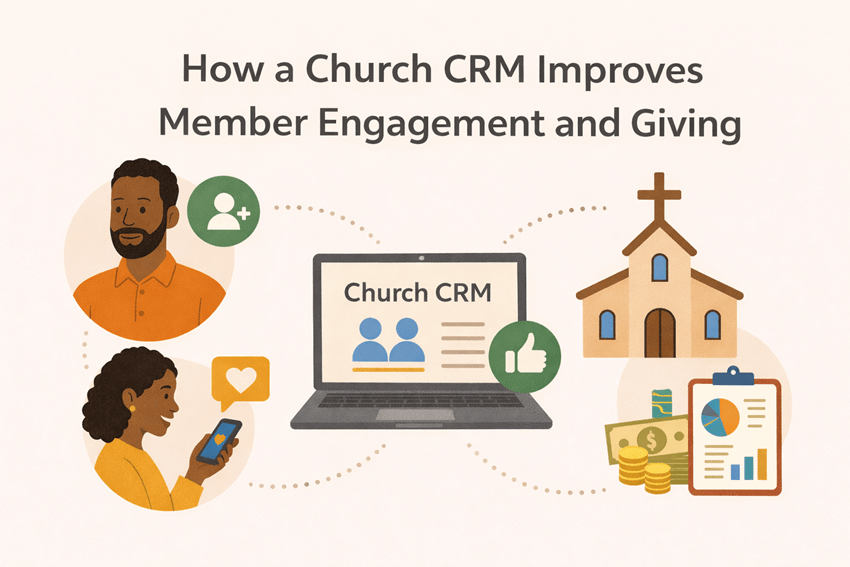
As a pastor or church leader, you care deeply about each member of your congregation. You want everyone to feel connected, spiritually nourished, and involved in the life of the church. Yet as your ministry grows, it gets harder to personally keep up with every visitor, volunteer, and donor. Important details can slip through the cracks despite your best intentions. This is where a Church CRM can make a world of difference. A Church CRM system is essentially a digital ministry assistant – a tool that helps you organize information and automate routine tasks so no one falls through the cracks. By centralizing data and streamlining communication, a Church CRM frees you to focus on what matters most: building relationships and fostering a generous, engaged church family.
In simple terms, a Church CRM (Customer Relationship Management) is software designed to help churches track and nurture relationships. It keeps all your important information about members, visitors, volunteers, donations, and events in one place. Instead of juggling spreadsheets, lists, and sticky notes, you have a single, secure database accessible to your pastoral team. You can quickly pull up a family’s contact info, see their involvement in small groups, or review a donor’s giving history all in one hub. This unified view is incredibly helpful in ministry – it means every interaction with your people can be informed and personal.
A flat-style illustration of a church and interconnected data symbolizes how a Church CRM centralizes member information. When all your ministry data is organized in one place, it’s easier to understand and engage your congregation.
Beyond being a fancy Rolodex, a Church CRM is a strategic ministry tool. It helps you notice patterns and needs that might otherwise be missed. For example, you might spot that a usually active member hasn’t attended in a month, or that donations typically dip each summer. With this insight, you can respond proactively – reaching out to the missing member or planning a giving campaign before the summer slump hits. In short, a Church CRM matters because it amplifies your pastoral awareness. It equips you to serve your people more intentionally by providing the information and automation that support deeper engagement and consistent generosity.
Nothing makes people feel more valued than a timely, personal follow-up. When someone new visits your church or a member has a prayer need, how you follow up can determine whether they stick around and feel cared for. A Church CRM shines in this area by ensuring personalized follow-up happens consistently.
A pastor reviews a member’s profile in the church office. Church CRM tools provide thorough profiles of each person – including their involvement, communication history, and even important dates – so leaders can follow up with a personal touch.
Imagine this scenario: a new family fills out a connection card on Sunday. Instead of that card getting lost in a stack of papers, their information goes into your CRM. Immediately, an automated workflow kicks in – by Tuesday they receive a warm welcome email, a staff member is notified to call and invite them to next week’s newcomers lunch, and the pastor is reminded to say hello by name when they return. No one is overlooked. The software makes sure every visitor and member is followed up according to plan.
The result is that people experience genuine care. The CRM keeps detailed notes and history for each person, so you can remember that Joe visited because he’s new to the area, or that Susan requested prayer for her surgery. When you later ask Susan how she’s recovering, she’ll be touched that the church remembered – not realizing your “memory” was jogged by a CRM note. This kind of attentive follow-up deepens relationships. Members feel seen and loved as individuals, which strengthens their connection to the church. In ministry terms, a Church CRM helps you “know well the condition of your flock” by equipping you with the little details that mean a lot.
Consistent, clear communication is the lifeblood of an engaged congregation. From event announcements to prayer chain updates, there’s always a message to send out. A Church CRM supports automated communication tools that make it easy to keep everyone in the loop and feeling involved without overburdening your staff. In fact, many churches find that by automating routine messages and reminders, they free up time to invest in face-to-face ministry while still keeping a consistent presence in their people’s lives.
Digital communication illustration: Church CRMs can automatically send emails or texts to specific groups, ensuring everyone gets timely updates. By scheduling messages and using targeted lists (like volunteers, parents, or first-time visitors), your church stays connected and no one misses out.
Think about the various groups in your church and how you communicate with them. With a CRM, you can segment your congregation into lists or groups (for example, youth group parents, worship team members, first-time visitors, etc.). Targeted messages can then be sent to each group as needed. Need to remind the worship team about Thursday practice? Schedule a quick text to that specific list. Want to send a monthly newsletter? Use an email template in your CRM and send it to all members, or even schedule it to go out automatically every first Monday. Because these tools are integrated in one system, every email or text is also logged under each person’s profile, building a history of interaction. Over time, you can see who’s opening emails or which messages resonate – giving you feedback on how to communicate effectively.
Automation doesn’t mean impersonal; in fact, it helps your communication be more consistently personal. You can merge in first names to email greetings, or automatically send a birthday message to members on their special day. Your voice as a pastor remains warm and authentic – the CRM just ensures it goes out on time to the right people. By maintaining a regular touchpoint through emails, texts, or even a church app, people stay connected to church life beyond Sunday. They’ll be less likely to drift away because they consistently hear from their church family and are reminded of opportunities to engage. In short, automated communication tools help your church community feel informed, included, and cared for throughout the week.
Stewarding the financial gifts of your congregation is a serious responsibility. A Church CRM with integrated giving or donor management features can greatly support this aspect of ministry. Donor tracking in a CRM means you have up-to-date records of each person’s giving history, pledge commitments, and contact info, all linked together. Why does this matter? Because understanding giving patterns allows you to encourage more consistent giving and express gratitude in a timely manner.
Church administrator’s workspace: A Church CRM provides at-a-glance donation tracking and reports. With clear data on giving trends, leaders can make informed decisions and members receive accurate giving statements and acknowledgments promptly.
For instance, many Church CRMs support online giving and even recurring giving options. When you enable easy online and mobile giving, you simplify the giving process for members and encourage consistent tithes and offerings. People are more likely to give regularly when it only takes a few clicks, or when they can set up a recurring monthly donation (which helps them honor their intent to put God first in finances). Recurring giving features encourage consistent habits and provide a steadier cash flow for ministry planning. Instead of unpredictable spikes and dips, your budget can become more stable, allowing better planning for programs and outreach.
A CRM also helps you shepherd givers by ensuring every donation is acknowledged. You can automate thank-you emails or letters whenever a gift is received, which is not only polite but reinforces to donors that their contribution is noticed and appreciated. Additionally, when year-end comes, generating giving statements for tax purposes is a breeze – no scrambling through paper records. With accurate donor histories, you might notice, for example, that a family who used to give frequently hasn’t given in six months. That insight is an opportunity to check in lovingly: maybe they’re going through a hardship the church can help with. Thus, tracking donations isn’t about seeing “who’s giving how much” for the sake of numbers – it’s about caring for your donors as part of your flock. It enables you to thank people appropriately, identify those who may need encouragement or assistance, and run giving campaigns with better insight. When people feel their contributions are handled transparently and gratefully, trust grows and they are motivated to continue supporting the church’s mission.
Beyond day-to-day communication and giving, a Church CRM provides engagement reports and analytics that give you a bird’s-eye view of your ministry’s health. Think of reports on attendance trends, small group participation, volunteer hours, and giving patterns over time. Instead of guessing, you can actually see data that tells a story. These insights help you make informed, strategic decisions in line with your pastoral intuition. For example, an engagement report might reveal that mid-week Bible study attendance has been dropping for two consecutive quarters, or that a surge of new members joined after a big community outreach event. Armed with this knowledge, you and your team can prayerfully respond – perhaps by revitalizing the Bible study format or replicating the successful outreach in the future.
The reporting tools in a Church CRM turn raw data into actionable information. Most systems let you generate custom reports or dashboards that display key metrics like weekly attendance, new visitors, volunteer participation, and donation totals. Many church leaders find that having these metrics readily available helps them focus on what matters. For instance, if you notice through reports that overall attendance is steady but youth attendance is declining, you might decide to invest more in youth ministry efforts. Or if small group involvement is high, it could signal that’s a strength to continue building on. Likewise, tracking giving over the year can highlight seasons where engagement (and thus giving) wanes, prompting proactive engagement efforts during those times.
Importantly, data-driven insight complements spiritual discernment. It’s not about treating church like a business; it’s about being wise stewards of the people God has entrusted to you. A CRM’s engagement reports simply shine a light on areas of growth or concern that you might not see amid the weekly bustle. In fact, church management studies emphasize that leaders can monitor key metrics like attendance and giving patterns to assess the success of initiatives and overall church health. When used well, these insights lead to timely action – maybe reaching out to individuals who have quietly slipped away, or celebrating wins like improved volunteer involvement. In short, engagement reports give you factual feedback on how your congregation is doing, so you can shepherd the flock more effectively.
To paint an even clearer picture, here are a few real-world style scenarios showing how a church CRM can boost engagement and giving in practical ways:
These scenarios reflect everyday ministry enhanced by a CRM. In each case, the technology helped facilitate a personal touch – not replace it. You’re still doing the praying, calling, thanking, and loving; the CRM is just helping ensure it all happens consistently.
If you’re considering a Church CRM for your church, you’re looking toward a tool that can strengthen your ministry’s foundation. Here are some practical next steps and tips as you move forward:
In conclusion, embracing a Church CRM is about enhancing your stewardship of both people and resources.
It’s a blend of pastoral warmth and smart strategy. By leveraging technology to personalize follow-up, automate routine communications, track giving, and glean insights, you create an environment where members feel genuinely cared for and motivated to participate. The administrative load is lightened, and you can devote more energy to preaching, teaching, and pastoral care. If you have been feeling the strain of keeping up with growth or changing needs, a Church CRM might be the timely provision that enables your church to thrive. Pray about it, talk with other church leaders who’ve implemented these tools, and take that next step. With the right CRM in place, you’ll be well on your way to a more connected, engaged, and generous church community – all for the glory of God and the growth of His Kingdom.