Physical Address
304 North Cardinal St.
Dorchester Center, MA 02124
Physical Address
304 North Cardinal St.
Dorchester Center, MA 02124

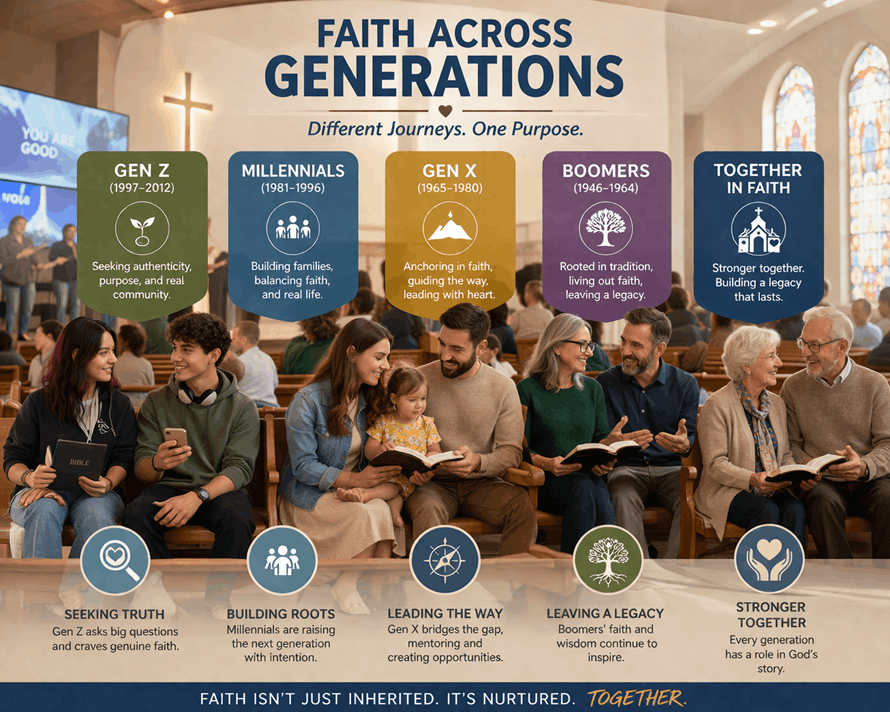
Ever wondered why the pews look a little different these days, or why some generations seem more present in church than others? You’re not alone! The landscape of faith and community is constantly shifting, and understanding Gen Z church attendance, alongside that of Millennials, Gen X, and Boomers, is crucial for families and ministries alike. This isn’t just about numbers; it’s about connection, purpose, and how we pass on our deepest values. Let’s explore the unique spiritual journeys of each generation and uncover the powerful role the family plays in shaping faith engagement.
Each generation carries distinct experiences and perspectives that influence their relationship with organized religion. While general trends exist, it’s important to remember that individual faith journeys are always deeply personal. Here’s a snapshot of how various generations engage with church today:
Born between 1997 and 2012, Gen Z is often labeled as the least religiously affiliated generation. However, this doesn’t mean they lack spirituality. Many are “nones” (no religious affiliation) but are deeply interested in social justice, mental health, and finding authentic communities. Traditional church structures can sometimes feel outdated or inauthentic to them. For churches, understanding Gen Z church attendance means recognizing their desire for genuine connection, honest conversations about doubt, and opportunities for meaningful action. They respond to authenticity, transparency, and a clear sense of purpose that extends beyond Sunday mornings.
Millennials (born 1981-1996) have also shown a decline in traditional church attendance compared to previous generations, often seeking churches that are socially conscious, inclusive, and offer a strong sense of community. They value purpose-driven ministry, opportunities to serve, and a space where their children can grow in faith. Many left the church in their young adult years but are now, as parents, seeking spiritual homes that align with their values for their families.
Often overlooked, Gen X (born 1965-1980) acts as a bridge between the more traditionally religious Boomers and the less affiliated younger generations. Their church attendance can be varied; some are highly committed, others are more sporadic, often driven by their children’s activities or community involvement. They appreciate practical teaching, relatable leadership, and ministries that support their busy family lives. Their presence often provides stability and leadership within many congregations.
Born between 1946 and 1964, Baby Boomers represent the generation with the highest traditional church attendance rates. Many grew up in an era where church was a central pillar of community and family life. They often form the backbone of established congregations, contributing significantly through volunteering, leadership, and financial support. While their numbers are aging, their commitment and wisdom remain invaluable.
While generational trends are illuminating, perhaps the most consistent and powerful influence on church attendance across all age groups is the family. The values, practices, and conversations around faith within the home profoundly shape an individual’s spiritual journey, from childhood well into adulthood.
Research consistently shows that parental religious practice is a strong predictor of a child’s future church attendance. When parents actively participate in faith communities, discuss spiritual matters at home, and model a living faith, children are far more likely to engage with faith as they grow up. This isn’t about forced attendance, but about creating an environment where faith is a natural, valued part of life. For youth church attendance, the home sets the stage.
Churches that intentionally foster intergenerational relationships often thrive. When Gen Z can connect with Boomers, Millennials with Gen X, and everyone in between, the church becomes a richer, more vibrant community. These connections allow for the sharing of wisdom, support, and diverse perspectives on faith, reinforcing the idea that faith is a journey shared by all ages, strengthening generational faith within the church.
So, how can churches and families effectively engage all generations, especially when considering Gen Z church attendance and beyond? It requires intentionality, flexibility, and a whole lot of love.
The patterns of church attendance by generation are complex, but they also present incredible opportunities. By understanding the unique needs and desires of Gen Z, Millennials, Gen X, and Boomers, and by leaning into the enduring strength of the family factor in church life, we can build more vibrant, inclusive, and spiritually rich communities. The future of faith is not about forcing attendance, but about inviting genuine connection, fostering authentic community, and creating spaces where every generation feels valued, seen, and empowered to explore their spiritual journey. Let’s work together to nurture faith that thrives across the generations.