Physical Address
304 North Cardinal St.
Dorchester Center, MA 02124
Physical Address
304 North Cardinal St.
Dorchester Center, MA 02124

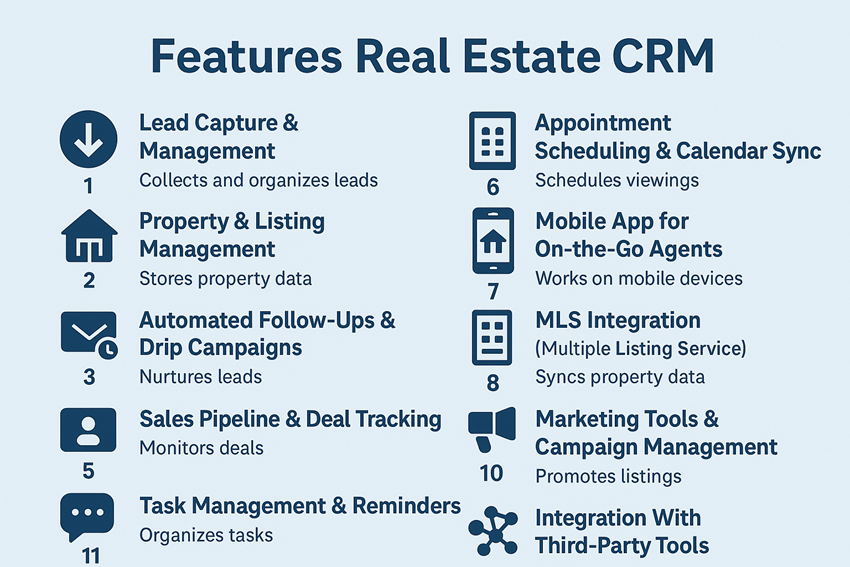
A real estate CRM must automatically collect leads from websites, landing pages, social media, and ads. It should organize and categorize leads so agents can follow up quickly and efficiently.
Allows agents to store, update, and organize all property information in one place—photos, pricing, availability, location, and features. This keeps listings consistent and easy to share with clients.
Real estate sales rely on timely communication. The CRM should send automated email/SMS sequences to nurture leads, remind them of property updates, and keep communication active without manual effort.
Each client needs a full profile including preferences, budgets, saved properties, communication history, notes, and documents. This helps agents personalize their approach and deliver a better customer experience.
A visual sales pipeline helps agents track each lead’s progress—from first contact to closing the deal. It helps identify hot leads, upcoming opportunities, and bottlenecks in the sales process.
Agents should be able to book property viewings, open houses, and client meetings directly from the CRM. Syncing with Google or Outlook calendars ensures nothing is missed.
Real estate professionals work outside the office. A mobile-friendly CRM or app allows them to update leads, check listings, and communicate with clients while in the field.
Integration with MLS helps agents sync property data automatically, ensuring listings are always up-to-date and accurate.
Includes email marketing, SMS marketing, social posting, and landing page creation. Agents can run targeted campaigns to promote new listings or re-engage old leads.
Real estate transactions require many documents. A CRM with secure storage and e-signature tools speeds up contracts, agreements, and paperwork.
Helps agents stay organized with to-do lists, reminders, and automated tasks linked to each stage of the sales cycle.
Provides insights into lead sources, agent performance, campaign success, and conversion rates. This helps agencies make data-driven decisions and improve their sales strategy.
For real estate teams, features like shared notes, internal chat, lead assignment, and permission controls ensure a smooth workflow and better coordination.
Ranks leads based on engagement and readiness to buy or sell. Agents can focus on high-value leads first, improving conversion rates.
A good CRM connects with marketing platforms, accounting software, call tracking tools, property portals, and more. This keeps everything unified and reduces manual work.